Floatings role in regulating your Autonomic Nervous System (ANS)
Over half of us have a chronic disorder such as high blood pressure or autoimmune disease, rates of anxiety, depression, PTSD and addiction are skyrocketing. Why?
The roots of these issues and more can often be traced to trauma, adverse childhood experiences, chronic stress and ultimately, nervous system dysregulation.
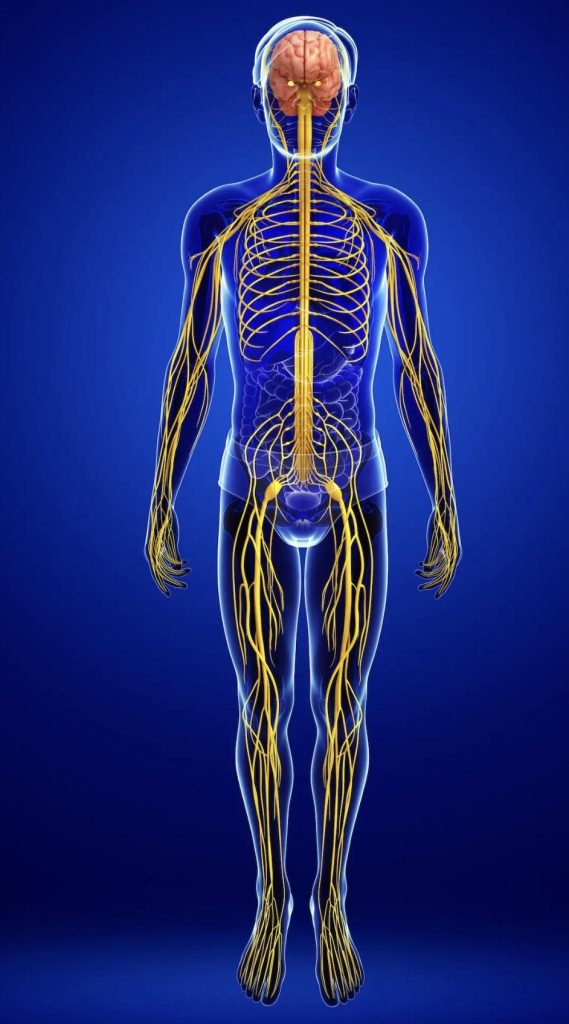
Meet your autonomic nervous system, ANS takes care of a lot of your automatic functions, like your heartbeat, digestion and body temperature, and also manages your survival and stress response, working to keep you alive when your life is in danger.
And functions as our built-in detection system, constantly scanning our environment for cues of safety and cues of danger and scans the environment.
ANS has three general responses or states:
Safe; When you feel calm, relaxed and connected to those around you
Mobilised; This is when ANS detects danger. It then sends commands so your heart rate and breathing increase, adrenaline and cortisol are released and blood rushes to your muscles so you can handle the threat, commonly known as “Fight or Flight”
Immobilised: when ANS detects that the danger is so great that you can’t fight or run, it shuts you down. In this state, our heart rate, blood pressure and body temperature decrease and pain numbing endorphins are released and does all of this automatically without us thinking about it, and doesn’t just use these states for survival.
Your ANS uses these states/responses to navigate through the world each day.
When ANS functions well,
· it moves fluidly from one state to another. One minute mobilised and ready for action, and the next resting and recovering and will often blend states together.
· When we play, ANS combines the mobilised and safe states.
· And when we are intimate with loved ones, it combines immobilised and safe states.
· When ANS can stay flexible and fluid like this, it helps us manage and become resilient to stress and negative events, we’re able to bounce back and move on.
Unfortunately, when we experienced trauma and chronic stress, it can keep ANS from functioning in a healthy, regulated and resilient way and can keep us stuck in states of survival.
· A friendly get together can become frightening.
· A simple meeting at work can become threatening.
For those with a history of trauma and chronic stress, the ANS detection system often becomes faulty – constantly signaling danger even when we are safe.
It’s like ANS is an alarm system, constantly signaling “fire” even when there’s no smoke and no flames. Consistently living in these survival states can be debilitating. And we often develop adaptive strategies like using drugs, alcohol, food, work or sex in an attempt to bring regulation and temporary relief.
Understanding how trauma impacts us is critically important.
There is a whole spectrum of experiences that can be traumatising, and have an adverse impact on us, things like accidents, assaults or even natural disasters, which are often called shock traumas. There’s also developmental or relational trauma, when we experience chronic adversity, abuse, neglect and lack of safety while growing up. Many other experiences can be traumatising, including chronic stress, medical procedures and adverse community environments like poverty, discrimination, and violence. Additionally, new research and epigenetics shows us that trauma can get passed down genetically through at least three generations.
In the past, we’ve thought about trauma as events that happened to us. We now know that trauma is an experience, not an event. It’s what happens inside of us as a result of what happens to us. It’s our response to the event rather than the event itself.
Over 25 years ago, Kaiser and the CDC in America launched a groundbreaking study of over 17,000 patients that showed a direct link between adverse childhood experiences or aces and long-term health and wellness. In the study, two thirds of participants reported at least one Ace over 20% reported three or more when participants reported four or more aces. This corresponded to an increased chance for heart disease, cancer, drug abuse, and more. with six or more aces, life expectancy decreases by almost 20 years.
A recent study in Northern Ireland (The Prevalence and Impact of Adverse Childhood Experiences in Northern Ireland) show for the first time the true extent of childhood trauma and its impact on all people in Northern Ireland with Naomi Long (Justice Minister) quoted as saying
“The findings from this research are both striking and sobering. We now have crucial evidence of how childhood trauma shapes life outcomes in Northern Ireland. The findings show clear correlations between higher exposure to trauma in childhood and many negative outcomes, including poorer educational achievement, chronic health conditions like rheumatoid arthritis and chronic pain, increased exposure to domestic violence, addiction, poor mental health and health-harming behaviours. These are significant findings, which will impact and inform policy and delivery across the Executive.”
We are learning that many physical and emotional symptoms may emerge from a chronically dysregulated ANS. And when ANS get stuck in survival states, our biology shifts its focus from the tasks that keep us healthy, happy and thriving to surviving the immediate perceived threat. Many conditions and symptoms that are chronic and difficult to diagnose and treat can be attributed to a dysfunctional ANS.
Our childhood experiences can also keep us from connecting with others. This is vitally important because as children, our number one survival priority is to attach to caregivers, when the people responsible for our safety aren’t safe and we are living in chronic states of unsafety, the part of ANS that judges what is safe and what is not, becomes faulty. If intimacy and connection were unsafe as a child, as adults will often unconsciously reject attempts from friends and partners to connect. Even though intimacy and connection is what we want, and feels it’s unsafe and won’t allow it. Trauma compromises our ability to engage with others, replacing the need for connection with the need for protection when there has been trauma and can no longer differentiate between our unsafe past and are now safe present, and can’t turn off the need to protect even though we are now safe.
So what can we do when ANS becomes dysregulated? How do we recover from trauma and develop a healthy, regulated resilient nervous system? Fortunately, we can retrain ANS to feel safe again. This is best done with the help of others. Each one of us has an ANS and our ANS is constantly communicating with and attuning to the status of others, we autonomically mirror the status of those around us. This is called co regulating. We see it in herd behaviour. If one animal senses danger, the entire group becomes more alert, increasing their chances of survival. We’re exactly the same. When we’re with others who are stressed, angry or depressed. It makes us feel worse. When we’re with others who are calm and happy, it makes us feel better. connecting with others who are safe, attuned and present is the best way to restore a healthy and for those struggling to recover from the impacts of trauma.
There is an emerging field of innovative clinical therapies that had been developed to reestablish safety and regulation to and we’re also learning that many of the activities we intuitively know make us feel better, and floatation is one of the best ways to support your ANS become more regulated and resilient. healing from trauma and finding relief from being stuck living in survival states, floatation increases your capacity for resilience and regains your ANS’s flexibility. It’s not about being calm all the time or mobilised all the time. It’s about having a flexible and regulated nervous system that can accurately assess safety and danger and responds appropriately.
This equilibrium is what you provoke in the floatation cabin
We’re truly resilient when we can fluidly move from one state to another. For those living with the impacts of trauma and chronic stress, becoming unstuck is like beginning a new life. For the rest of us. Understanding how our nervous system states guide our behaviour, can help us become happier, healthier, and more empathetic human beings. Collectively, we have an epidemic of social issues that are rooted in trauma. If we can do the work to heal past traumas, and build healthy, regulated nervous systems as individuals, families and communities, we can end the cycles that continue to reinforce our greatest challenges and create a safer, vibrant and more connected world.
Floatation can play a key role in achieving this.